
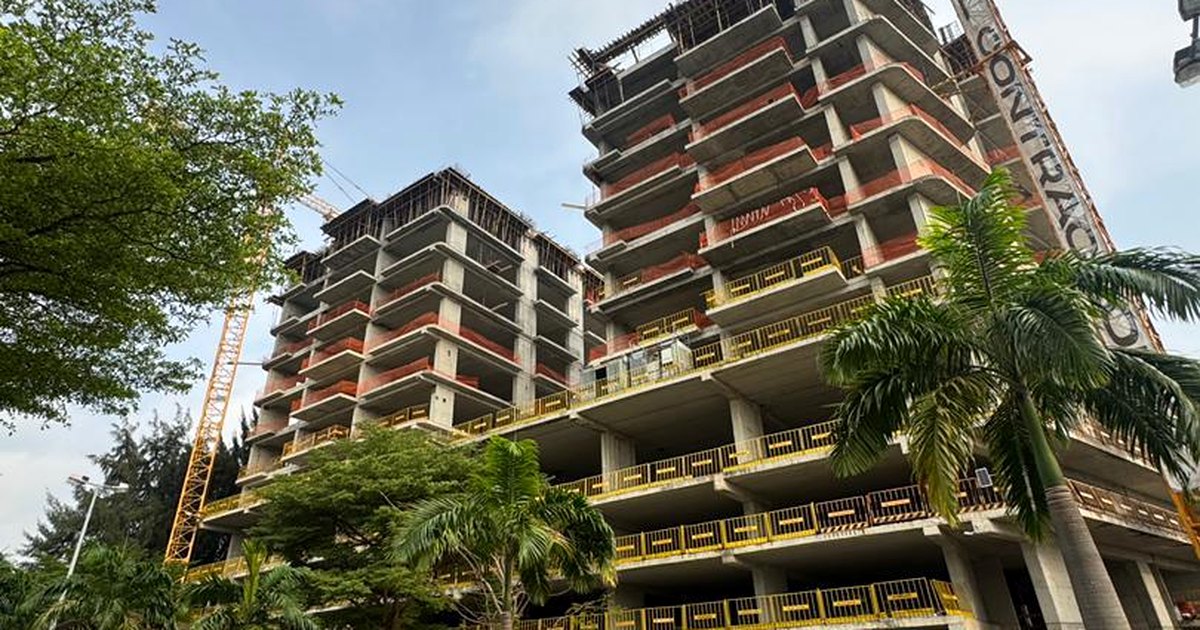
What buying off-plan really means
An off-plan purchase is an agreement to acquire property that has not yet been completed. In Lagos law, an off-plan arrangement includes deposits taken for property yet to be developed or still in development, with delivery promised on agreed terms.
The buyer is therefore assessing both a future residence and the developer’s ability to complete it. Drawings, visualisations and a model apartment describe an intended outcome; they are not evidence that approvals, funding, construction quality or delivery are already secured.
“Treat the development, the land, the contract and the delivery plan as four separate things to verify.”
1. Verify the land and title before the apartment
Begin with the land on which the development stands. Ask for the root title, survey plan and documents showing how the developer or landowner obtained the interest being offered. A unit allocation or offer letter does not replace verification of the underlying land.
An independent Lagos-qualified property lawyer should conduct the relevant searches and review whether the land is affected by an acquisition, encumbrance, dispute or competing interest. A licensed surveyor can help confirm that the survey details and physical location correspond.
- Request the root title and survey plan.
- Confirm the legal relationship between the landowner and developer.
- Use independent professionals rather than relying only on documents supplied by the seller.
- Confirm the transfer documents expected at completion and who bears registration costs.
2. Ask for evidence of planning and building approvals
A title document and a building approval answer different questions. Title concerns the interest in land. Planning and building-control records concern whether the proposed development may lawfully be built in its stated form.
Ask for the planning permit and evidence that the development has followed the required building-control process. Lagos State Building Control Agency requirements include notice before construction, inspections at defined stages and completion or fitness documentation. A buyer should not assume that visible construction proves regulatory compliance.
- Planning permit for the development being marketed.
- Approved drawings that match the advertised height, use and unit layout.
- Evidence of commencement and relevant stage inspections.
- Any required environmental, drainage or other site-specific clearances.
3. Review the developer’s delivery record, not only its pipeline
Company registration is a baseline check, not proof of land ownership, funding or delivery capacity. Confirm the company’s identity and regulatory standing, then look for completed and occupied developments that can be inspected.
Compare promised and actual delivery dates, ask previous buyers how defects and title documentation were handled, and review whether the completed building resembles the specification originally sold. Projects announced or still under construction do not provide the same evidence as completed work.
4. Make the contract do more than record the price
Reservation forms and payment receipts should not be the only record of the transaction. Before paying a substantial deposit, have an independent lawyer review the sale agreement, development specification and payment schedule together.
The documents should explain what is being bought, the unit size and position, the agreed specification, the target delivery framework, what counts as delay, how changes are handled, remedies for material default, assignment rights, fees, taxes, service charges and the documents due at handover.
- Unit identity, size, floor, parking and ancillary spaces.
- A sufficiently detailed finishes and amenities specification.
- Payment dates connected to clear construction milestones where possible.
- Delay, variation, cancellation, refund and dispute provisions.
- Handover conditions, defect process and final title documentation.
5. Understand what the payment plan does — and does not — protect
A long instalment plan can make a purchase easier to schedule, but it does not by itself reduce delivery risk. Ask how construction is funded, whether buyer deposits are ring-fenced, and what evidence triggers each payment milestone.
Where payments are linked to progress, define milestones objectively and consider independent certification before major tranches. Keep every invoice, receipt, notice and approved variation. Never treat a verbal assurance as a substitute for an agreed written term.
6. Monitor construction with evidence, not percentages alone
A stated completion percentage can be difficult to interpret without a programme of works. Request dated site photographs, milestone updates and explanations of what has been completed, what comes next and whether the programme has changed.
For a material purchase, an independent architect, engineer or surveyor can inspect visible progress and help compare the work with approved information. This does not guarantee completion, but it gives the buyer a stronger basis for questions and payment decisions.
7. Plan for quality checks before handover
Quality should be defined before construction finishes. Keep the agreed specification and approved variations, then compare them with the completed unit. Marketing language such as ‘premium finish’ is too broad to resolve a disagreement about materials, fittings or workmanship.
Before accepting handover, inspect the unit and record defects in a written snag list. Test water, power, drainage, doors, windows, cooling, appliances and life-safety systems where applicable. Confirm the timetable for corrections and retain a signed record of what remains outstanding.
A practical decision framework
No single document removes every risk. The purpose of due diligence is to bring the important uncertainties into view before money is committed and to create clear records for the construction and handover period.
“A persuasive presentation can introduce a development. It should never be the entire basis of the decision.”
- Land and title independently checked.
- Planning and building-control evidence reviewed.
- Developer identity and completed track record examined.
- Contract, specification and payment milestones professionally reviewed.
- Progress reporting and inspection rights agreed.
- Snagging, handover and final documentation understood.